|
10. Is the
New Testament Historical?
The New
Testament claims to be the written record Jesus' ministry, his
teachings and the formation of his church. How can these claims be
validated? The New Testament proclaims itself as truth, meaning its
words should correspond with fact. The Gospels and Epistles are filled
with individual names, places and events. Do these New Testament
records correspond with historical facts? If the New Testament is not
true but fictious, why should we rely on its contents for spiritual
truth?
 The New Testament was written by 10 different authors who witnessed and
reported the events in their day. One simple test is to compare the
New Testament with verifiable historical records. With the rise of
humanism and skeptism the scriptures and their historicity came under
sharp attack in the Eighteenth and Nineteenth centuries. Late dates of
authorship, and reports of historical errors were attributed to the New
Testament. Sir William Ramsay (1850’s) regarded as one of the greatest
archaeologist ever was a skeptic of the early dates attributed to the
books of the bible. He dated Acts and Luke to the mid 2nd century.
After doing a topographical study of Asia minor and using the writings
of Luke, he was forced to change his mind. He wrote, “I found myself
brought into contact with the “Book of Acts” as an authority for the
topography, antiquities and society of Asia Minor. It was gradually
borne upon me that in various details the narrative showed marvelous
truth”.
The New Testament was written by 10 different authors who witnessed and
reported the events in their day. One simple test is to compare the
New Testament with verifiable historical records. With the rise of
humanism and skeptism the scriptures and their historicity came under
sharp attack in the Eighteenth and Nineteenth centuries. Late dates of
authorship, and reports of historical errors were attributed to the New
Testament. Sir William Ramsay (1850’s) regarded as one of the greatest
archaeologist ever was a skeptic of the early dates attributed to the
books of the bible. He dated Acts and Luke to the mid 2nd century.
After doing a topographical study of Asia minor and using the writings
of Luke, he was forced to change his mind. He wrote, “I found myself
brought into contact with the “Book of Acts” as an authority for the
topography, antiquities and society of Asia Minor. It was gradually
borne upon me that in various details the narrative showed marvelous
truth”.
How
Archeology confirms the Bible?
 The life of Jesus and his disciples is filled with concrete facts that
can be verified in history and archeology. In 1986 after a severe
drought the water level of the Sea of Galilee dropped. And the outline
of a boat was revealed in the mud just 5 miles from Capernaum.
Capernaum was the center of Jesus ministry and where Peter’s house was
located. The boat was carbon dated between 40 BC and 40 AD. The boat
was 26.5 feet long, 7.5 feet wide and 4 feet high and could be rowed or
sailed. This corresponds with the gospel accounts of Jesus and his
disciples on the sea of Galilee. In Luke 5:1-7 we see this type of a
boat in service. So we are able to verify the words with facts. This
attests to the historicity of the book.
The life of Jesus and his disciples is filled with concrete facts that
can be verified in history and archeology. In 1986 after a severe
drought the water level of the Sea of Galilee dropped. And the outline
of a boat was revealed in the mud just 5 miles from Capernaum.
Capernaum was the center of Jesus ministry and where Peter’s house was
located. The boat was carbon dated between 40 BC and 40 AD. The boat
was 26.5 feet long, 7.5 feet wide and 4 feet high and could be rowed or
sailed. This corresponds with the gospel accounts of Jesus and his
disciples on the sea of Galilee. In Luke 5:1-7 we see this type of a
boat in service. So we are able to verify the words with facts. This
attests to the historicity of the book.
 Another example, the coins at use during the time of first century are
also concrete pieces of evidence that attest to the historicity of the
books. Jesus’ reference to the widow offering (Mark 12:42-44) two
copper coins can be attested to both by the coins existence as well as
the confirmation of Roman and Jewish non-Christian writers during this
time. The ability to compare physical evidence with claims allows us to
validate the writers. The validation of the New Testament records does
not in itself prove inspiration. What it does prove is the historical
accuracy of the writer.
Another example, the coins at use during the time of first century are
also concrete pieces of evidence that attest to the historicity of the
books. Jesus’ reference to the widow offering (Mark 12:42-44) two
copper coins can be attested to both by the coins existence as well as
the confirmation of Roman and Jewish non-Christian writers during this
time. The ability to compare physical evidence with claims allows us to
validate the writers. The validation of the New Testament records does
not in itself prove inspiration. What it does prove is the historical
accuracy of the writer.
We are not able to verify every fact, because some
historical records are lost, and not all archeological finds have been
uncovered. But each verified fact and event gives added credibility to
the author as being truthful. This evidence counters those who
challenge the New Testament as being a fabrication of 2nd and
3rd century writers, “The Higher Criticism”. The details of
some of the facts are so specific and regional that unless the writer
had intimate knowledge of the details, names, places and words used
during the specific period they would be proven false. In 70 AD when
the Temple was destroyed and the Jews dispersed everything changed,
along with the ability to create the scenes without specific knowledge.
Luke in Acts 18:12, calls Gallio “Proconsul”, this was
questioned by critical scholars but Luke was proven correct. When the
Delphi inscription was found it verified some very specific history
which before had been questioned. On the inscription it read:
“As Lucius
Junius Gallio, my friend, and the Proconsul of Achaia”
Gallio
only held the post of Proconsul for one year from July 1, 52 AD and that
one year overlapped with Paul ministry in Corinth. This specific
information verified the title of Gallio and also the year of Paul
ministry in Corinth. This one example is repeated and time again as
history and archeology continue to verify the New Testament. Examples
such as this have caused many skeptics and critics of the New Testament
to completely change their viewpoints.
Anglican
critic, who started the “Death of God” movement, John A. T. Robinson,
wrote the book, “Redating the New Testament” after he realized the
incredible archeological evidence contradicting his earlier position.
He re-dated Matthew to 40 to 60 AD, Mark at 45 to 60, Luke at before 57
to after 60 and John from before 40 to after 65.
This discovery of evidence can be extrapolated over a time
line of New Testament records. The more points on the line that are
confirmed the greater the weight of evidence.

Extrapolating New Testament Evidence
What types
of evidence validates the historicity of the New Testament?
In examing the historical evidence for the New Testament the
types of evidence can be categorized into three types, Historical,
Archeological and Documentary. Each piece of evidence can
be used to fill in and extrapolate the evidence.
As we
compile the various pieces of evidence both from writers who lived (Documentary
Evidence) during the time of Jesus and physical evidence (Archeological
Evidence) that verifies events (Historical Evidence) in the
bible we can conclude the New Testament is historically truthful.
But the history of the New Testament is not on trial rather
it is the contents of its claims. The claims the New Testament makes
about Jesus are incredible. So if we conclude the writers are correct
about the “History” then we are forced to answer, are they correct about
the person of Jesus?
Documentary Evidence
There are
two types of Documentary evidence we can examine; Christian and
Non-Christian.
The
Christian documentary evidence is overwhelming and in its scope and
volume compared to other manuscripts.
Christian
Documentary Evidence:
A. Greek
New Testament Manuscripts are numbered at 5366 and date from within 50
years of the autograph for the earliest fragments.
|
Author |
Book |
Date Written |
Earliest
Copies |
Time Gap |
No. of
Copies |
|
Homer |
Iliad |
800 BC |
C. 400 BC |
400 years |
643 |
|
Herodotus |
History |
480-425 BC |
C. 900 AD |
1350 years |
8 |
|
Thucydides |
History |
460-400 BC |
900 AD |
1300 years |
8 |
|
Plato |
|
400 BC |
900 AD |
1300 years |
8 |
|
Demosthenes |
|
300 BC |
900 AD |
1300 years |
7 |
|
Caesar |
Gallic Wars |
100-44 BC |
900 AD |
1000 years |
10 |
|
Livy |
History of
Rome |
59-17 AD |
4th Century (Partial), Mostly 10th
Century |
400 years
1000 years |
1 partial
19 copies |
|
Tacitus |
Annals |
100 AD |
1100 AD |
1000 years |
20 |
|
Pliny
Secundus |
Natural History |
61-113 AD |
850 AD |
750 years |
7 |
|
New
Testament |
|
50-100 AD |
114 Fragments 200 (Books) 250 (Most NT) 325
(Complete NT) |
50 years 100 years 150 years 225 years |
5366 |
B.
Translations of New Testament writings into other languages.
The New
Testament was translated into other languages as Christianity spread out
from the Roman Empire.
1. Syriac
Versions
Syriac
Peshitta, translated AD 150-250, there are more then 350 manuscripts
dating from the 5th century.
Palestinian
Syriac AD 400-450 AD
Philoxenian
(AD 508)
Harkleian
Syriac (AD 616)
2. Latin
Versions
·
African Old Latin (Codex Babbiensis 400 AD)
·
Codex Corviensis (AD 400-500)
·
Codex Vercellensis (AD 360)
·
Codex Palatinus (AD 500-600)
·
Latin Vulgate (Meaning common or popular) translated by Jerome at the
request of Damascus bishop of Rome (AD 366-384)
3. Coptic
(Egyptian Versions)
·
Sahidic. Beginning of the third century
·
Bohairic 4th Century
·
Middle-Egyptian Fourth or fifth century.
4. Other
Translation
Armenian:
(400 AD)
Gothic:
Fourth century
Georgian:
Fifth century
Ethiopic:
Sixth century
Nubian:
Sixth century
C.
Early Church Lectionaries
The second
largest group of NT Greek manuscripts are the Lectionaries
which number 2396 dating from the 6th to the 9th
century. They contain all the New Testament many times with the
exception of Revelation and Acts.
D. Early
Church Father Quotations
The
quotations from the NT manuscripts are so numerous and so widespread by
the early church fathers that if there did not exist any NT manuscripts,
one could be reproduced from the writings of the early church fathers.
This validates the transmission, and authority of the NT manuscripts.
|
Writer |
Gospels |
Acts |
Pauline Epistles |
General Epistles |
Revelation |
Totals |
|
Justin Martyr
(133 AD) |
268 |
10 |
43 |
6 |
3
(266 allusions) |
330 |
|
Irenaeus
(180 AD) |
1038 |
194 |
499 |
23 |
65 |
1819 |
|
Clement
(150-212 AD) |
1107 |
44 |
1127 |
207 |
11 |
2406 |
|
Origen
(185-253 AD) |
9231 |
349 |
7778 |
399 |
165 |
17,992 |
|
Tertullian
(166-220 AD) |
3822 |
502 |
2609 |
120 |
205 |
7258 |
|
Hippolytus
(170-235 AD) |
734 |
42 |
387 |
27 |
188 |
1378 |
|
Eusebius
(324 AD) |
3258 |
211 |
1592 |
88 |
27 |
5176 |
|
Grand Total |
19,368 |
1352 |
14,035 |
870 |
664 |
36,289 |
The
Specificity of History
One way
the historicity of the NT is validated is through the specific
historical citations which would be difficult if not impossible if the
writer was not in the time period. For example Chapters 13 to 28 in
Acts, authored by Luke lists over 43 specific places, locations and
names. The list below is a sampling of the 43 items, listed from Bakers
Encyclopedia of Christian Apologetics.
1.
A
natural crossing between correctly named ports (13:4-5). Mount Casius,
south of Seleucia, stands within sight of Cyprus. The name of the
porconsul in 13:7 cannot be confirmed, but the family of Sergii Pauli is
attested.
2.
The proper river port, Perga, for a ship crossing from Cyprus (13:13)
3.
The proper location of Lycaonia (14:6)
4.
The unusual but correct declension of the Lystra and the correct
language spoken in Lystra. Correct identification of the two gods
associated with the city, Zeus and Hermes (14:12).
5.
The proper port, Attalia, for returning travelers (14:25)
6.
The correct route from the Cilician Gates (16:1)
7.
The proper form of the name Troas (16:8)
8.
The proper identification of Philippi as a Roman colony. The right
location for the river Gangites near Philippi (16:13)
9.
Association of Thyatira with cloth dyeing (16:14). Correct designations
of the titles for the colony magistrates (16:20,35,36,38).
10.
The proper locations where travelers would spend successive nights on
this journey (17;1)
11.
The presence of a synagogue in Thessalonica (17:1) and the proper title
of politarch for the magistrates (17:6).
12.
The correct explanation that sea travel is the most convenient way to
reach Athens in summer with favoring east winds (17:14).
13.
The abundance of images in Athens (17:16), and reference to the
synagogue there (17:17).
14.
Depiction of philosophical debate in the agora (17:17). Use in
17:18-19 of the correct Athenian slang epithet for Paul, spermologos,
and the correct name of the cort (areios pagos). Accurate
depiction of Athenian character (17:21). Correct identification of altar
to “An unknown god” (17:23). Logical reaction of philosophers who deny
bodily resurrection (17:32). Areopoites, the correct title for a
member of the court (17:34).
15.
Correct identification of the Corinthian synagogue (18:4). Correct
designation of Gallio as proconsul (18:12). The bema (Judgment
seat) can still be seen in Corinth’s forum (18:16).
16.
The cult of Artemis of the Ephesians (19:24,27). The cult is well
attested, and the Ephesian theater was the city meeting-place (19:29)
17.
Correct title grammateus for the chief executive magistrate and
the proper title of honor, Neokoros (19:35). Correct name to
identify the goddess (19:37). Correct designation for those holding
court (19:38). Use of plural anthupatoi in 19:38 is probably a
remarkably exact reference to the fact that two men jointly exercised
the functions of proconsul at this time.
18.
Use of precise ethnic designation Beroiaios and the ethnic term
Asianos (20:4).
19.
The permanent stationing of a Roman cohort in the Fortress Antonia to
suppress disturbances at festival times (21:31). The flight of steps
used by guards (21:31,35)
20.
The correct identifications of Ananias as high priest (23:2) and Felix
as governor (23:24).
21.
Explanation of the provincial penal procedure (24:1-9)
22.
Agreement with Josephus of the name Porcius Festus (24:27)
23.
Note of the right legal appeal by a Roman citizen (25:11). The legal
formula of de quibus cognoscere volebam (25:18). The
characteristic form of reference to the emperor (25:26).
24.
Precise name and place given for the island of Cauda (27:16).
Appropriate sailors’ maneuvers at the time of a storm (27:16-19). The
fourteenth night judged by experienced Mediterranean navigators to be an
appropriate time for this journey in a storm (27:27). The proper term
for this section f the Adriatic Sea at this time (27:27). The precise
term, bolisantes, for taking soundings (27:28). The position of
probable approach of a ship running aground before an easterly wind
(27:39).
25.
The proper title protos (te nesou) fo ra man in Publius’s
position of leadership on the islands (28:7)
Non-Christian Documents
From early
non-Christian historians and writers we can confirm specific information
about Jesus and the early church. Norman Geisler writes the following;
1.
Jesus was from Nazareth;
2.
he lived a wise and virtuous life;
3.
he was crucified in Palestine under Pontius Pilate during the reign of
Tiberius Caesar at Passover time, being considered the Jewish king;
4.
he was believed by his disciples to have been raised from the dead three
days later;
5.
his enemies acknowledged that he performed unusual feats they called
“sorcery”;
6.
his small band of disciples multiplied rapidly, spreading even as far as
Rome;
7.
his disciples denied polytheism, lived moral lives, and worshiped Christ
as Divine.
This
picture confirms the view of Christ presented in the New Testament
Gospels.
These
writers include Josephus a Jewish Historian, (37-100 AD), Thallus a
Samaritan (52 AD), Tacitus (52 AD), Pliny the Younger (112 AD) the
governor of Bithynia in Asia Minor and others.
|
Graphic |
Description |
Quote |
|
 |
The
Pilate Inscription
In
1961 an Italian archaeologist, discovered an inscription at
Casesrea Maritima. The inscription in Latin contained 4 lines
translated as follows:
“Tiberium
Pontius Pilate
Prefect of Judea”
The
stone was probably used in a foundation of a Tiberium (temple
for the worship of Tiberius)
|
The
inscription clarifies the title of Pontius Pilate as “prefect”
at least during a time in his rulership. Tacitus and Josephus
later referred to him as “procurator”. The NT calls him
“governor”, a term incorporating both titles.
This inscription is the only archaeological evidence of both
Pilate’s name and this title.
|
|
 |
The
James Ossuary
Researchers may have uncovered the first archaeological evidence
that refers to Jesus as an actual person and identifies James,
the first leader of the Christian church, as his brother.
The 2,000-year-old ossuary—a box that held bones—bears the
inscription "James, son of Joseph, brother of Jesus." Until now,
all references to the three men have been found only in
manuscripts. Andre Lemaire, a
paleographer at the Sorbonne University in Paris dates the box,
which was empty, to 63 A.D.." Scientists at the Geological
Institute of Israel examined the box, which is made of Jerusalem
limestone, and judged it to be about 2,000 years old. The
inscription is written in Aramaic, in a form that further
narrows the possible time
frame.
"The script is very important
for the date because the Aramaic script changed over time in
ways we could measure," said P. Kyle McCarter, a paleographer at
Johns Hopkins University in Baltimore, Maryland. "It's the most
important criterion for dating this object, and the script is
consistent with a date in the middle of the first century A.D.
|
This gives us one more piece of evidence outside of the Bible
that these are real people, and that they're important people,
and provides a small confirmation for the claims made about
James as the brother of Jesus" What is highly unusual is the
mention of a brother." So far, with all the inscriptions we
have, only one other has mentioned a brother," said Lemaire.
"This is a very important point for the problem of
identification. There would need to be a special reason to
mention the brother. It suggests the brother was also prominent,
an important person." Jesus and Joseph were fairly common names
of that era; James, slightly less so. Statistical analysis
suggests that the possibility of these three names occurring in
the given relationships (son of Joseph, brother of Jesus) is
very small.
|
|
|
Caiaphas Ossuary
From the Caiaphas family tomb in Jerusalem, this ossuary bears
the inscription "Yehosef bar Qafa: (Joseph, son of Caiaphas),
and it is dated to the Second Temple Period. Caiaphas is the
name of the High Priest who presided over the trial of Jesus
(Matthew 26:3,57)
|
The
Ossuaries system ceased after 70 AD. The box contained the
bones of 4 children and an adult women and the bones of a man
aged about 60. The ornate decorations mean that he was a
significant person. Archeologists feel this may be the High
priest during the time of Christ.
Josephus refers to him as “Joseph who was called Caiaphas of the
high priest”
|
|
 |
Yohanan —-Crucified Victim
In
1968 an ancient burial site was uncovered containing about 35
bodies. One named Yohanan Ben Ha’galgol had a 7 inch nail driven
thru both feet. Evidence also exists that similar spikes were
used in his arms. Yohanan’s legs were crushed by a blow
consistent with the common use of Roman crucifragium (John
19:31-32)
|
Each of these details confirms the New Testament description of
Crucifixion.
|
|
 |
Matthias Tomb
A
first century stone coffin is marked with the sign of the cross
on its lid and a single name on its front: "Matthias". Scholars
believe this may be the final resting place of one of Jesus'
twelve Apostles. (Acts 1:23)
Prof. Sukenik, the father of Prof. Yigael Yadin who was the
legendary scholar famed for his extensive work on the Dead Sea
Scrolls, believed that he had unearthed one of the earliest
records of Christian faith found.
|
Confirms the early establishment of Christianity in Palestine.
And verification of new testament figures.
|
|
 |
Simon Barsabas Tomb
An
ossuary, found near the tomb of "Simon Barsabas" (Acts 1:21 &
15:22) is inscribed with the dedication: "[To] Jesus, the Lord."
Scholars believe this is the earliest record of Christian faith
ever found. The burial cave, where the stone coffin was
discovered, was sealed not later than the year 42 A.D., more
than a decade before any part of the New Testament was
written. What Sukenik discovered were the remains of a
family burial cave (catacomb) dating to the early part of the
first century. It included several stone ossuaries (coffins)
marked with the sign of the cross and with numerous
inscriptions, included several dedications to "Jesus."
|
Confirms the early establishment of Christianity in Palestine.
And verification of new testament figures.
|
|
 |
The
Nazareth Decree
A
slab of stone found in Nazareth in 1878, inscribed with a decree
form Emperor Claudius (AD 41-54) that no graves should be
disturbed or bodies extracted or moved. With the offender being
sentenced to Capital punishment on the charge of violation of a
sepulcher.
|
A
likely explanation is that Claudius having heard of the
Christian doctrine of resurrection and Jesus' empty tomb while
investigation the riots of AD 49, decided not to let any such
report surface again. This would make sense in light of the
Jewish argument that the body had been stolen (Mat. 28:11-15)
This is early testimony to the strong and persistent belief
that Jesus rose from the dead.
|
|
 |
The
Erastus Inscription
On
a slab of limestone which was a part of the pavement near the
theater in Corinth, a Latin inscription was found which
translates, “Erastus, in return for the aedileship, laid the
pavement at his own expense”
|
In
Romans 16:23 Paul writing from Corinth mentioned an Erastus and
identified him as a city official.
|
|
|
Leper remains of the First century
In
Jerusalem at Hinnom Valley, the 2000 year old remains of a
person with Hansen’s disease (Leprosy) has been found. According
to Shimon Gibson, an Israeli Archaeologist,
This is the first example of Hansen’s disease in the Middle
East. Prior to this the earliest examples of Hansen was dated
to the 5th century. |
This finding confirms the records of the Gospels about the
existence of Hansen’s disease (Lebrosy) and the attitude toward
those who had it. |
|
|
|
|
|
|
Non-Christian Witness |
Quote |
|
|
Thallus
Wrote about 52 AD. None of his writings exist but fragmented
citations are preserved. Julius Africanus, who wrote in AD 221
quotes Thallus in a discussion about the darkness that folllowed
the crucifixion of Christ: |
“On
the whole world there pressed a most fearful darkness, and the
places in Judea and other districts were thrown down. This
darkness This darkness Thallus, in the third book of his
History, calls, as appears to me without reason, an eclipse fo
the sun.” |
|
 |
Suetonius 117-138 AD
Was
chief secretary to Emperor Hadrian (117-138 AD) He confirms the
report in Acts 18:2 that Claudius commanded all Jews (among them
Priscilla and Aquila) to leave Rome in 49 AD.
|
He
writes,
“As the Jews were making constant disturbances at the
instigation of Chrestus, he expelled them from Rome.” (Suetonius,
Life of Claudius, 25.4)
On
the great fire of Rome he writes,
“Punishment was inflicted on the Christians, a body of people
addicted to a novel and mischievous superstition.” (Suetonius,
Life of Nero, 16)
Who |
|
 |
Tacitus 109
AD
The
1st century Roman historian is considered one of the most
accurate of the ancient world. He give an account of the great
fire of Rome for which some blamed the Emperor Nero:
|
He
writes
‘To
dispel the rumor, Nero substituted as culprits, and treated with
the most extreme punishments, some people, popularly known as
Christians, whose disgraceful activities were notorious. The
originator of that name, Christus, had been executed when
Tiberius was emperor, by order of the procurator Pontius Pilatus.
But the deadly cult, though checked for a time, was now breaking
out again not only in Judea, the birthplace of this evil, but
even throughout Rome, where all the nasty and disgusting ideas
from all over the world pour in and find a ready following.’ (Tacitus,
A, 15.44)
|
|
 |
Josephus
Josephus (37 A.D.-100 A.D.)
Was
a Pharisee of the priestly line and a Jewish Historian. He was
an eyewitness to the Roman capture of Jerusalem.
He
wrote two major works The Jewish Wars (77-78 AD) and Antiquities
of the Jews (94 AD).
Josephus writes about New Testament Individuals. James, Brother
of Jesus
John the Baptist
Jesus (Questioned)
|
James brother of Jesus
He
Writes, “He assembled the Sanhedrin of the judges and brought
before them the brother of Jesus who was called Christ, whose
name was James" Josephus, AJ, 20.9.1)
John the Baptist
He
writes, “Now, some of the Jews thought that the destruction of
Herod’s army came from God, and very justly, as a punishment of
the what he did against John, who was called the Baptist; fro
Herod slew him who was a good man and commanded the Jews to
exercise virtue...and so come to baptism (AJ 18.5.2)
|
|
 |
Pliny the Younger
Pliny the Younger was a Roman author and administrator. In a
letter to the Emperor Trajan in about 112 AD, Pliny describes
the early Christian worship practices:
This reference provides hard evidence that Jesus Christ was
worshipped as God from an early date by Christians who continued
to follow the practice of breaking bread together, as reported
in Acts 2:42,46
|
“They were in the habit of meeting on a certain fixed day before
it was light, when they sang in alternate verses a hymn to
Christ, as a to a god, and bound themselves by solemn oath, not
to do any wicked deeds, but never to commit any fraud, theft or
adultery, never to falsify their word, nor deny a trust when
they should be called upon to deliver it up; after which it was
their custom to separate, and them then reassemble to partake of
food—but food of an ordinary and innocent kind” (Pliny the
Younger, L 10:96).
|
|
 |
Emperor Trajan 98-117 AD
In
reply to Pliny’s letter, Emperor Trajan gave the following
guidelines for punishing Christians:
|
”No
search should be made for these people, when they are denounced
and found guilty they must be punished, with the restriction,
however, that when the party denies himself to be a Christian,
and shall give proof that he is not (that is by adoring our
gods) he shall be pardoned on the ground of repentance even
though he may have formerly incurred suspicion.” (Pliny the
Younger, L, 10:97)
|
|
 |
Talmud
Talmudic writings of most value concerning the historical Jesus
are those compiled between 70 — 200 AD.
The
Tannaitic Period. The most significant text is Sanhedrin 43a.
New
Testament details confirmed by this passage include the fact and
the time of the crucifixion, as well as the intent of the Jewish
religious leaders to kill Jesus.
|
“On
the eve of Passover Yeshu was hanged. For forty days before the
execution took place, a herald went forth and cried, “He is
going forth to be stoned because he has practiced sorcery and
enticed Israel to apostasy. Any one who can say anything in his
favor let him come forward and plead on his behalf.” But since
nothing was brought forward in his favor he was hanged on the
eve of the Passover!” (Babylonian Talmud)
|
|
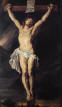 |
Lucian 165 AD
Lucian of Samosata was a second century Greek writer whose works
contain sarcastic critiques of Christianity He writes,
|
“The Christians, you know, worship a man to this day—the
distinguished personage who introduced their novel rites, and
was crucified on that account...You see, these misguided
creatures start with the general conviction that they are
immortal for all time, which explains the contempt of death and
voluntary self-devotion which are so common among them; and then
it was impressed on them by their original lawgiver that they
are all brothers from the moment that they are converted, and
deny the gods of Greece, and worship the crucified sage, and
live after his laws. All this they take quite on faith, with
the result that they despise all worldly goods alike, regarding
them merely as common property (Lucian of Samosata, DP,11-13)
|
|
 |
Mara Bar-Serapion
A
Syrian, Mara Bar-Serapion wrote to his son Serapion sometime
between the late first and early third centuries the letter
contains an apparent reference to Jesus:
|
What advantage did the Athenians gain from putting Socrates to
death? Famine and plague came upon them as a judgment for their
crime. What advantage did the men of Samos gain from burning
Pythagoras? In a moment their land was covered with sand. What
advantage did the Jews gain from executing their wise King? It
was just after that their Kingdom was abolished. God justly
avenged these three wise men: the Athenians died of hunger; the
Samians were overwhelmed by the sea; the Jews, ruined and driven
from their land, live in complete dispersion. But Socrates did
not die for good; he lived on in the teaching of Plato.
Pythagoras did not die for good; he lived on in the statue of
Hera. Nor did the wise King die for good; He lived on in the
teaching which He had given (British Museum)
|
|


